Showing posts with label aviation. Show all posts

Sunday, July 5, 2015

New England's East-West Airlines - Introduction


Graphic: East West Airlines travel advertisement. Especially in its early days, the airline depended heavily on tourist promotions to support its scheduled services with their sometimes low and variable traffic.

Last September I wrote an introductory post on Don Shand, the founder of East-West Airlines.

An interesting introductory history of the airline focused especially on the Hudson connection and written by Roger McDonald can be found on the adastron site. I quote from the introduction:

East-West Airlines Ltd., formed at Tamworth NSW in late 1946, commenced operations between Tamworth and Sydney on June 23, 1947.

The company had one of the longest and safest associations with civil Lockheed Hudson aircraft compared with any other operator of the type in Australia. The company went on to operate DC-3, Fokker F-27, F-28, BAe-146-300 and B727-200 aircraft on a route structure that at one time, crossed Australia from north to south and east to west.

In August 1982, control of the company passed from many small shareholders, the majority of whom were from the Tamworth region, to a new controlling shareholder. The company was subsequently re-sold twice before it was acquired in July 1987 by Ansett Transport Industries Ltd who maintained its identity with a vastly different route structure.

Following substantial losses, all services and aircraft were integrated into Ansett Airlines effective October 31, 1993 with the company officially ceasing to trade on December 31, 1993 although the company structure remains as a registered identity.

The East-West story is a fascinating one and deserves to be more widely remembered. So this is a note to myself to write more about it.

Monday, April 27, 2015

Belshaw sans words - New England aviation series

I have established a new blog, Belshaw sans words, simply to consolidate with a few words of text photos and other visual material that I have discovered in my travels. As you might expect, the blog has a particular focus on New England.

I have decide that the best approach to the new blog is to run photos in series. That way people get to see a story.

New England aviation is the current series focus. Here I have been having a great deal of fun searching round for photos of planes with a New England connection. I have not looked in this type of very focused way before, and I have found a lot.

Do visit and enjoy.

Friday, April 10, 2015

East West Airline's first Focker arrives at Tamworth


I just wanted to get this photo down of the arrival at Tamworth of EWA's first Focker ferried in under the command of James Swan.

Monday, April 6, 2015

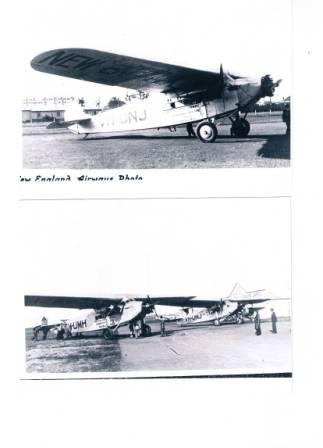
New England Airways - two more photos

My thanks to Bruce Robinson for sending me some more photos of New England Airways, New England's first major airline. For those interested in the history of New England Airways, a list of previous posts on NEA can be found at the end of this post.

I normally compress photos to save space and speed loading. However, if I load the full photo you can then see the detail by clicking on it, so that is what I have done in this case. Later: This does not appear to work in this case. Not sure why.

Photo: The following photo shows a Shell tanker fuelling the Ryan. Bruce advises that the vehicle is a Crossley and was converted from the limo that was used by the Duke of Gloustershire during his visit to Australia.The guy in the seat of the Crossley was Ralph Virtue (Keith's brother) who was killed in the Puss Moth crash near Byron Bay.


Photos: The first photo shows the Ryan outside the NEA hangar, the second shows a Stinson flying over Sydney.


Previous Posts

11 September 2006. New England Australia - Aviation introduces the story of the founding of New England Airways by George A Robinson.

12 September 2006. New England Airways - Postscript provides access to some very good early photos of NEA passengers.

14 September 2006. New England Airways - Follow Up contains some further musings plus photos.

17 October 2006. New England Australia Aviation Pioneers - the Virtues introduces another pioneering New England family closely associated with the history of New England Airways.

4 January 2015. Transport Pioneers - The Robinson Family; a further note outlines the early story of the Robinson family as transport pioneers in the Macleay Valley.

Tuesday, January 27, 2015

Aeropelican - Anthony Lawrence's poem

On 15 January I outlined the history of the New England airline Aeropelican originally established to fly between Sydney and Belmont, Newcastle. I mentioned that I had flown this route, one of the most beautiful in Australia.

I see that the New England born poet Anthony Lawrence has written a poem, Aeropelican, that describes this flight. The plane takes off:

All seats on this fourteen-seater have windows,
the portside view a brief slideshow
of Sydney's northern beaches and beyond --
Broken Bay with its sea-going lion's headscrubbed green with altitude,
then to an entrance of lakes,
where silt makes a dye-fed film of arteries threatening closure

The plane comes in to land:

The rest of the flight is unfocussed
as a Newcastle skyline when Newcastle smoked.
The landing, like takeoff, is all loom and fade.
Coming in over Belmont, three boys stand by their rods
to wave from the end of a breaking wall.

Wednesday, January 14, 2015

Aeropelican - a classic New England airline case

Apology: My apologies to anybody whoreceived multiple feeds on this one. I ran into some editing problems.

Photo: Aeropelican Metro 23 19 passengers

In an earlier post I mentioned that Newcastle airline Aeropelican was to begin services between Inverell and Sydney, with connections also to Newcastle at the weekend.

Now I see from the Northern Daily Leader (Tamworth) that Aeropelican is thinking of establishing a service linking Tamworth, Armidale and Newcastle.

The Aeropelican story is a fascinating one that is in many ways typical of the story of civil aviation in New England, although this story is perhaps most remarkable in that Aeropelican came back.

In 1957 the late Keith Hilder operated a DH90 aircraft out of Broadmeadow aerodrome, an inner suburb of Newcastle, which was also the home of the Royal Newcastle Aero Club.

Following advice to the Club from the Australian Department of Civil Aviation that the Broadmeadow field was to close, a search began for alternative sites, with a final choice between Rutherford and Pelican.

The Club chose to go with Rutherford, but Keith decided to develop an alternative site at Pelican around 20k south of Newcastle that he hoped might be used as a base for Sydney-Newcastle air services in competition with the existing service using the RAAF base at Williamtown to the north of Newcastle.

The 27 acre site lay between the sea and Lake Macquarie, was swampy and covered with tea trees, cabbage palms and general scrub. In 1959 after a series of complicated moves Keith obtained a 25 year lease over the site and began development. The land was cleared, drains dug, and thousands of tons of chitter from the nearby mines brought in to provide fill. Soil was then added and grass planted, forming a grass strip.

While all this was in process, Keith applied for a Flying School and Air Charter Licence. After long delays, this was finally granted in July 1962. With flying training and charter operations underway, Keith turned his attention to obtaining a license to operate scheduled services between Sydney and Pelican. Again there were long delays, with a full license not being granted until June 1971.

Services began using an 8-passenger Cessna 402 aircraft. Then in April, 1976 Aeropelican introduced its first DHC-6 Twin Otter Series 100 aircraft to its fleet of Cessna 402's. However, Keith Hilder never really saw the DHC-6 in scheduled operation, as he was admitted to hospital 2 days after the arrival of the aircraft, dieing 3 June, 1976.

The Hilder family continued developing both the Flying Training School and the scheduled air service. The first DHC-6 Twin Otter aircraft proved ideally suited to the short sector high density flying demanded by the route, with a second Twin Otter purchased in 1977 and a third in 1978.

In 1980 the Hilder family decided to sell the entire Aeropelican operation to Cootamundra based Masling Airlines, then owned and operated by Jack Masling, another pioneer of regional aviation. Then in August 1981 Aeropelican was acquired by a company jointly owned by TNT and News Limited, ultimately becoming a wholly owned subsidiary of Ansett Australia.

To this point Aeropolican's history, growth followed by merger or sale, had conformed to the traditional pattern of New England's airlines. However, it was to avoid the final stage, disappearance.

Aeropelican operated in a specific market niche and Ansett maintained it as a separate identified operation. Following the collapse of Ansett, Aeropelican was placed into voluntary administration. It was then sold in April 2002 to International Air Parts Pty Ltd, allowing the company to resume its independence as a specialist niche operator between Newcastle and Sydney, although flights now go to Williamtown rather than the old pelican field.

This Newcastle-Sydney route, one that I have flown in fact landing at the Pelican strip, is one of the most visually beautiful in Australia.

Now Aeropelican is spreading its independent wings, hopefully avoiding the problems that others have experienced.

Tuesday, January 6, 2015

Newcastle's Aeropelican to fly to Inverell

I was pleased to see from the Inverell Times that Newcastle based Aeropelican will start services between Inverell and Sydney in February, replacing the services previously provided by Big Sky Express.

Weekday services will go direct, with weekend services via Newcastle.

Tuesday, December 5, 2006

A Civil Aviation Policy for New England

In my last post I spoke of New England's civil aviation woes.

Anybody who has read this blog will know my complaint that the absence of a formal structure for New England - essentially statehood - prevents New England's problems being dealt with in a coordinated fashion.

In my previous posts on New England and the NSW Government's Ten Year Plan (here 1, here 2, here 3) I suggested that the Plan failed in part because it did not address New England's needs in an integrated fashion and that indeed it could not because of the way Government was structured.

Similar issues arise in civil aviation, an issue that was not addressed in the Plan.

Under the Australian constitution, the states have responsibility for intra-state aviation. In theory, they can regulate this to their heart's content. In practice they face a number of problems:


  1. A significant proportion of civil aviation is interstate. Indeed, over 99 per cent of New England's scheduled services ate interstate in that they go beyond New England's boundaries.
  2. The rules laid down under National Competition Policy impede what any state can do.
  3. Aviation industry structure is now largely national. The days of major carriers focused on particular states or areas within a state are largely gone.

These limitations do not mean that a state Government cannot do something. Consider the following:

  1. At present, the majority of New England's international air traffic goes in and out through Sydney, to a lesser extent through Brisbane. In the 1990s Coffs Harbour attempted to establish limited international flights to New Zealand. Whether New England should attempt to build direct international flights is uncertain, but the issue of international travel at least needs to be addressed in the context of a New England tourism strategy.
  2. At present, many New England air travellers have to use Kingsford Smith Airport in Sydney as a hub. Again in the 1990s, Impulse tried to build Newcastle as a hub before becoming distracted by its broader ambitions. Should New England consider the development of New England hubbing activities? Or the development of rival hubs outside New England?
  3. Parts of New England have very poor air connections with Brisbane. Growth in South East Queensland makes Brisbane a rival for Sydney for many services. What can be done to improve air connections with Brisbane?
  4. More broadly, many parts of New England have poor air services to begin with. There are also very limited internal connections. In fact, both areas are worse today than they were thirty years ago. What might be done to improve the situation?

In considering these questions I think that it is important to remember that Sydney and New England are in fundamental if presently unequal economic competition. New England wants to attract people and investment that would otherwise go to Sydney.

Sydney has a Government to look after it. You only have to look at the Sydney weighting in the NSW Ten Year Plan to see this. New England does not. In these circumstances, it is up to New Englanders to try to articulate a different and coordinated view about New England's needs.

Big Sky Express & New England's Aviation Woes

In previous posts I began to sketch out the history of aviation in New England starting with New England Airways.

Over the last fifty years New England has seen the rise and fall of a number of local airlines. East West Airlines, Eastern, Oxley, Tamair all rose either to be taken over or forced to close for trading reasons. Other airlines such as Impulse, Hazelton and Rex have entered the market, made a special feature of New England and then been forced to withdraw in whole and part.

We can now add Big Sky Express and Sunshine Express to the growing list.

I was sorry to see that Big Sky Express had struck problems. Big Sky was unusual as a community based airline. Following the loss of air services to Gunnedah and Inverell back in the 1990s, , these communities including Shire Councils and businesses combined along with private investors to create Big Sky Express as a community airline. Services began with flights from Inverell and Gunnedah to Sydney, with Grafton and Taree services added later.

The Brisbane based Transair provided aircraft and operational support the new community airline. This model - a community or locally owned business backed up by a service provider - has become very common in Regional Australia as a way of filling gaps left by the withdrawal of big metro based businesses from parts of the country. The Bendigo Bank is perhaps the best known example.

The model depends for its success upon the strength of the service provider. Unfortunately for Big Sky, TransAir had been experiencing problems for some time including a major accident that killed 15, was grounded in November over safety concerns, and has now closed entirely with possible criminal charges pending. Big Sky has closed as a consequence.

We can also add Sunshine Express to the list. Sunshine withdrew from all scheduled services in September.

The Armidale Express reported the airline's departure with the last Armidale-Brisbane flight - one way only - on September 30.

According to Sunshine's Laffer, "The reason behind our decision to withdraw airline services is that in two of our key markets in Queensland, Hervey Bay and Biloela, QantasLink has announced that they are entering those markets," Mr Laffer said.

"As a result of that we have no alternative other than to withdraw our services from other markets to maintain a viable business".

Prior to its withdrawal, Sunshine Express was able to secure interest for the Port Macquarie-Coffs Harbour-Brisbane air service with the Canberra-based Brindabella Airlines taking over the route plus one aircraft and a number of staff. However, this left Armidale and Tamworth without a Brisbane air service.

Sunshine's withdrawal came just two months after REX Airlines withdrew from the Armidale-Sydney service, leaving Armidale with with only the Sydney-Armidale service provided by QantasLink.

The last time Armidale was in this position air traffic declined very sharply because of the high fares set by QantasLink. REX's entry to the market with consequent fare reductions saw a significant increase in air travel.

Monday, October 16, 2006

New England Australia Aviation Pioneers - the Virtues


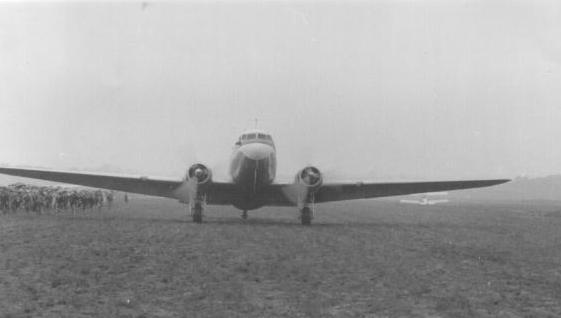
Photo: Australian National Airways Captain Keith Virtue posing with DC-3 VH-ANR "Oana". Keith Virtue was the first Australian pilot to accumulate 20,000 hours.

Source Virtue family collection, from the Cuskelly site. This site includes a range of aviation related material, including the story of Adastra, another of Australia's pioneer aviation companies. The Sydney based Adastra was founded in 1931, finishing its life in the 1970's shortly after its acquisition by East West Airlines and the relocation of its HQ to Tamworth.

My thanks to Bruce Robinson and to John Lee from Chicago for more material on New England Airways and those associated with the company. I am still absorbing this. In the meantime, a brief snippet on another part of the pioneer story, Keith Virtue, who was a pilot with New England and went on to a long and distinguished career in Australian civil aviation.

Thanks to Bruce and John I now know that there is a biography of Keith that also covers the early days on New England Airways and of Airlines of Australia, Joan Priest's Virtue in Flying. (Angus and Roberston, 1975). So I have put this on my list to find, read and report back.

As I presently understand it, Keith was the youngest of ten boys and grew up near Lismore. An elder brother Ralph was also a pilot with New England and was killed in the NEA plane crash that also saw the death of pioneer aviator Leslie Holden plus another. I understand that there is a memorial near the crash site.

Again as I understand it, Keith married one of G A Robinson's daughters. By the end of his flying career Keith had established what was probably a world record of around 40,000 commercial flying hours, a title later taken over by his nephew Jason Hassard, 42,000 hours. I think that Jason was also a pilot with Airlines of Australia.

I will write more later. In the meantime, checking material reminded me that one of Australia's most famous air crashes involved an Airline of Australia Stinson flying btween Brisbane and Sydney in 1937. The plane crashed on the Lamington Ranges shortly after take-off from Brisbane. A search failed to find the wreckage.

Nine days after the crash, Beaudesert grazier Bernard O'Reilly set out on foot to find the plane. Through his superior bush skills he found the crash site and, to his surprise, two survivors in desperate need of medical attention. After making them comfortable, he left them to organise a rescue party. The full story can be found in the Queensland Government archives.

Friday, October 13, 2006

New England Airways - Follow Up


Photo: New England Airways, Avro10s, photo courtesy of Bruce Robinson.

While this blog has a historical focus, one of the nice things about it is that I am not bound by the canons of academic discipline. Yes, I do try to observe proper standards, but because I do not want an academic career (it's a bit late for that!), I do not have to subject myself to the whole rigmarole. I can go where I like.

My aim when I started was to capture and document the New England experience before it was lost, hopefully drawing others in. I am starting to get there.

In earlier posts I spoke of New England Airways (here(1) and here(2)).

I first came across a reference to New England Airways back in 1982 when I was doing my PhD thesis. I was fascinated. I knew Don Shand and the story of East West Airlines (story), but I had never heard of New England Airways. Yet here was a pioneer airline of some substance holding the Sydney-Brisbane mail contract that had somehow vanished. I could not do anything about it at the time, so put it aside.

When I launched this blog and came to write something for the first time on New England aviation I made finding out something about New England Airways my first priority. While the on-line historical record was skimpy it did allow me to fill in some gaps. In turn, this led Bruce Robinson, the grandson son of New England's founder George A Robinson, to contact me. Now we may be able to fill in some gaps.

Does this matter? I think that it does very much and not just from a New England perspective.

Today when airlines are the bus lines of the sky, we forget the romance and the physical and commercial risks associated with this early period. Nevile Shute, one of my favourite authors, brings this early period alive in many of his books. New England Airways was a major player in this early period and deserves to be remembered for that fact alone.

Thursday, September 14, 2006

New England Australia Aviation - Don Shand


Photo: East West Airlines' DC3 lands at Port Macquarie

I really wanted to find a photo of Don Shand to illustrate this story. I could not.

Born in Sydney in 1904, Don Shand founded East West Airlines in 1947. The company had meant to fly east west between Moree and Grafton, but low traffic densities shifted the focus to north south between New England centres and Sydney.

Don was a remarkable man who deserves many posts. I thought that I would share some personal stories.

While I had heard many stories about Don, I first remember really remember him on a DC3 flight from Sydney to Armidale.

We had just come back from Bangkok. I knew something special was happening as we joined the plane because the crew were running round, holding us at the door. They removed a seat, allowing this very large man to occupy a full row. When I asked my mother who this was, she said Don Shand.

She told me the story of the time she was sick in Armidale Hospital. Her room overlooked the nearby park. She saw great activity with men stringing telephone wire towards the hospital. She asked the nurse what was happening. The nurse explained that Don was in hospital following a mild heart attack. Unable to get access to a phone for his international calls, there was no connection in his ward, Don had immediately ordered men in to install a new phone line to the hospital.

This from Uncle Ron.

Don had just married for the second time and had taken to wearing just a pajama top to bed. A fox had been attacking the hens, Don wanted to get it, so stood a loaded shot gun by the bed.

That night there was great commotion from the chook yard. Don jumped out of bed, grabbed the gun and rushed out the front door, calling his dog as he did so.

It was a bright moonlit night. Don saw the fox, propped, raised the gun to his shoulder. As he did so his dog, running behind and unable to stop, rammed his wet nose up Don's bare backside, causing Don to fire both barrels. The fox escaped, but there was awful damage done to the chooks!

Tuesday, September 12, 2006

New England Airways - Postscript


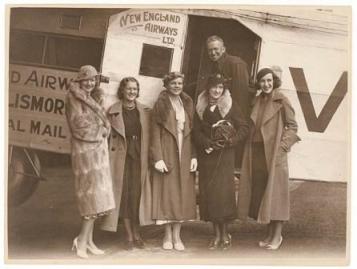
Photo: Passengers New England Airways Hood Collection

Since I wrote my first post on New England Australia - Aviation, I have found some rather wonderful pictures on New England Airways.

I cannot reproduce them all here. The e-blogger format will not allow me to do so in proper size, while I am also not sure of copyright issues. So what I thought I might do is insert one photo as a sample and then give you the links to them all with some comments so that you can enjoy them when you have time.

The photographs are:
  • The City of Grafton at night. The catalogue for this and the following shot refers to the City of Grafton as a WEA plane. I have done a web search check and there is a clear typo. It should be NEA. There is a gritty, almost war like, feel about this photo. Look at the uniforms.
  • Group with City of Grafton at night. Again a gritty feel. Note the different hats, caps and the young boy in the front.
  • New England Airways Lismore-Brisbane. A businessman gets off the plane. The plane's construction including the external control cables can be clearly seen. Note the Royal Mail sign. Mail contracts were a major driver in the formation of the early airlines.
  • New England Airway Passengers. My favourite photo, hence it's inclusion in the post. look at the coats worn by the women. My favourite is the fur coat on the left. Presumably coats were necessary because of the cold at altitude. Note the hair styles.

Sunday, September 10, 2006

New England Australia - Aviation


Photo. New England Airways Avro parked at Archerfield, Brisbane c 1933.

New England has had more than its fair share of pioneer aviators. Unfortunately, like so much of New England's history, this has become submerged in the mists of time.

When I started at TAS (The Armidale School), a former senior prefect Sir P G Taylor was one of the school hero's.

Taylor was involved with flying since at least 1916. Perhaps his most famous exploit came in 1935. The story that follows is drawn from Keith Isaacs' ADB entry on Taylor given in the previous link.

Taylor was Kingsford Smith's navigator in the Southern Cross for the King George V jubilee airmail flight (Australia-New Zealand). After flying for six hours, the heavily-laden aircraft had almost reached half-way when part of the centre engine's exhaust manifold broke off and severely damaged the starboard propeller. 'Smithy' closed down the vibrating starboard engine, applied full power to the other two, turned back to Australia and jettisoned the cargo. The oil pressure on the port engine began to fall alarmingly.

Climbing out of the fuselage, Taylor edged his way against the strong slipstream along the engine connecting strut and collected oil from the disabled starboard engine in the casing of a thermos flask. He then transferred it to the port engine. With assistance from the wireless operator, John Stannage, he carried out this procedure six times before the aircraft landed safely at Mascot some nine hours later. For his resourcefulness and courage, Taylor was awarded the Empire Gallantry Medal.

This episode was portrayed in Ken Hall's 1946 film, Smithy, a film I saw later in the TAS Assembly Hall where films were held every Saturday night for the boarders. I was one of a small number of day boys, but always used to go.

The first New England based airline that I have found was called, appropriately enough, New England Airways. It appears that there have in fact been three New England Airways at different points in New England's history.

Headquartered in Lismore, the first New England Airways (NEA) was formed in 1931 by George A Robinson with Sydney solicitor Arthur Allen as chair.

In August 1931 NEA began a bi-weekly Lismore-Archerfield (Brisbane) service, later extended to a Lismore-Mascot (Sydney) service, thus creating a Brisbane- Sydney service. The popularity of the service was such that NEA purchased a tri-motor Avro 10 and extended the service to a daily one.

Flying had real dangers in these early days of civil aviation. On 18 September 1932 an NEA Puss Moth flying from Sydney to Brisbane crashed near Byron Bay. Among those killed was the pioneer Australian aviator Leslie Holden.

The industry was also very unstable in financial terms, with companies emerging, closing or merging all the time. G A Robinson took advantage of this, acquiring other airline assets including those of Murray Valley Aviation as well as Australian National Airlines' (the airline founded by Kingsford Smith) Mascot hangar and workshop and one of its planes. With broadening horizons and national ambitions, New England Airways was renamed Airlines of Australia in 1935. Then, in 1942 the second ANA formed by the Holyman family in 1937 acquired Airlines of Australia, giving ANA a dominant position in Australian civil aviation.

As we shall see later, this first New England Airways established what was to be the dominant pattern in New England civil aviation, regional growth followed by broader expansion, acquisition, and ultimate disappearance.